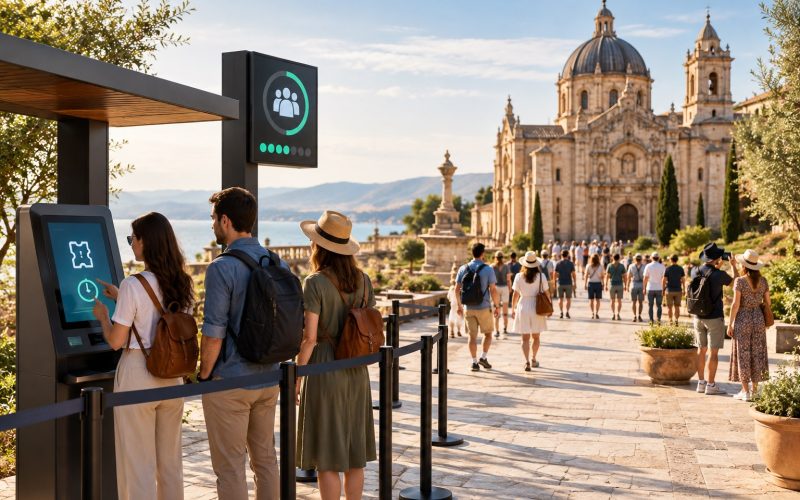
- AI agents are starting to book, not just suggest
The shift from AI as an advisor to AI as an actor is well underway. Rather than simply recommending flights or hotels, emerging AI agents can compare options across providers and complete a booking with minimal manual input. Adoption is still early — most travel and hospitality companies are experimenting rather than scaling these tools — but the direction of travel is clear, and the pace of change is accelerating quickly.
- Discovery is fragmenting beyond search engines
Travellers are no longer relying on a single search engine to research a trip. Social media, AI chatbots, and conversational search are increasingly where inspiration and planning begin. This fragmentation means travel brands need a presence across multiple discovery channels, not just traditional SEO, to stay visible during the planning stage.
- Personalisation now extends beyond the booking
Conversational AI tools can build itineraries tailored to a traveller’s specific goals — whether that’s relaxation, family time, or a niche interest — and continue refining suggestions throughout the trip itself, not just at the point of booking. This ongoing personalisation is becoming a key differentiator for travel platforms competing for repeat customers.
- Biometrics and chatbots are smoothing the journey
Beyond planning, AI is streamlining the physical travel experience. A large share of travellers say they’d consider using biometric gateways at airports and borders, while chatbots and virtual assistants have become the most common AI application among hotel chains today, handling everything from booking questions to in-stay requests.
- Adoption is uneven — and that’s the real opportunity
Despite the hype, most travel and hospitality companies remain in the early stages of AI agent adoption, with only a small share reporting that these tools have reached full scale in areas like marketing or product development. For travel businesses willing to move early, this gap between interest and execution is exactly where competitive advantage is being built.
A practical path forward
AI in travel isn’t about chasing every new tool — it’s about identifying where automation and personalisation genuinely improve the traveller experience, then implementing it with the same discipline as any other technology investment. The businesses getting ahead aren’t necessarily the most experimental; they’re the ones treating AI adoption as a structured, measurable process rather than a one-off pilot.