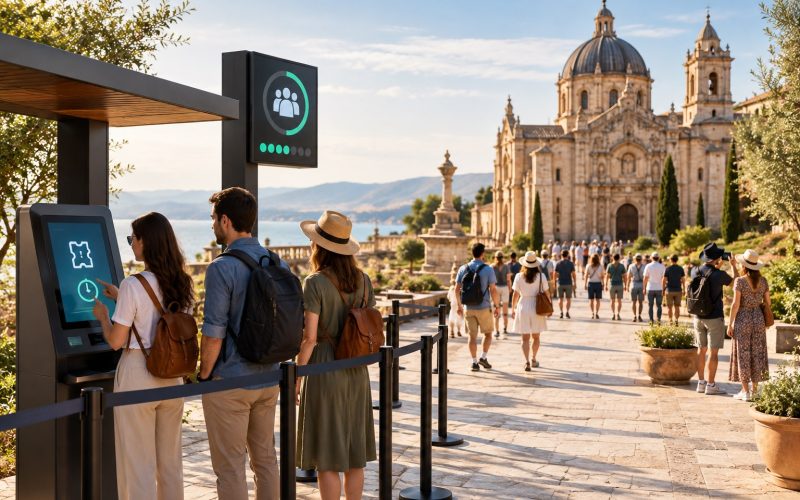
AI is raising the bar on personalisation and exposing weak data
Guests now expect recognition and relevant offers across every touchpoint, not just a welcome email with their first name inserted. Delivering that requires AI systems that can reason over accurate, current customer and booking data. Industry surveys suggest fewer than a third of travel and hospitality companies believe their own data is genuinely accessible to AI systems in this way. That gap, more than any shortage of AI tools, is what is currently limiting real personalisation. A CRM or booking platform with inconsistent customer records, disconnected loyalty and reservation data, or manual data entry will not produce meaningful personalisation no matter which AI layer sits on top of it.
Switching costs are collapsing
Loyalty used to work partly through inertia enough accumulated points that leaving felt costly. AI-assisted point valuation tools now make it trivial for a traveller to see exactly what their balance is worth and cash it out, while status-matching offers from rival brands remove much of the remaining friction. Airlines including United and JetBlue have responded by deepening partnerships rather than competing purely on programme generosity, betting that a wider, more useful network of value beats a bigger pile of points that are hard to redeem. Smaller tourism businesses without the scale for their own points currency should take the same lesson: partnerships and clear, immediate value now matter more than programme complexity.
Fraud has moved into the loyalty conversation
As loyalty accounts hold more transferable value, they have become a bigger target. Reported account takeovers on loyalty programmes have risen sharply over the past several years, and the fix looks less like a marketing project and more like a security one — multi-factor authentication, anomaly detection on redemptions, and the same monitoring discipline applied to payment systems. Tourism businesses adding AI-driven personalisation to their loyalty stack need to budget for this alongside it, not after an incident forces the issue.
Direct bookings are the practical counter to agentic disintermediation
This is where the loyalty question connects back to Muse and the broader shift toward AI agents booking on a traveller’s behalf. An agent optimising purely on price and availability has no reason to favour a business it has no relationship with. A business that holds clean, structured customer data, offers transparent and genuinely useful loyalty value, and can personalise an offer the moment a traveller re-engages directly still has something an anonymous agent-mediated transaction does not: a relationship the agent has to route through, or work around. Treating customer data and loyalty infrastructure as a strategic asset, rather than a marketing add-on, is one of the more durable defences against margin erosion as agentic booking tools mature.
What tourism businesses should do next
Start with an honest audit of whether customer, booking and loyalty data actually lives in one place and is clean enough for an AI system to use well most personalisation failures trace back to this rather than to the AI itself. Simplify what the programme actually offers before adding intelligence on top of it; complexity is what created loyalty fatigue in the first place. Put fraud controls on loyalty accounts on the same footing as payment security, and look for partnerships that extend value without demanding a bigger technology build. None of this requires predicting exactly how agentic AI will reshape distribution. It just requires making sure that when a traveller has a choice, your business is the one they still have a reason to choose directly.